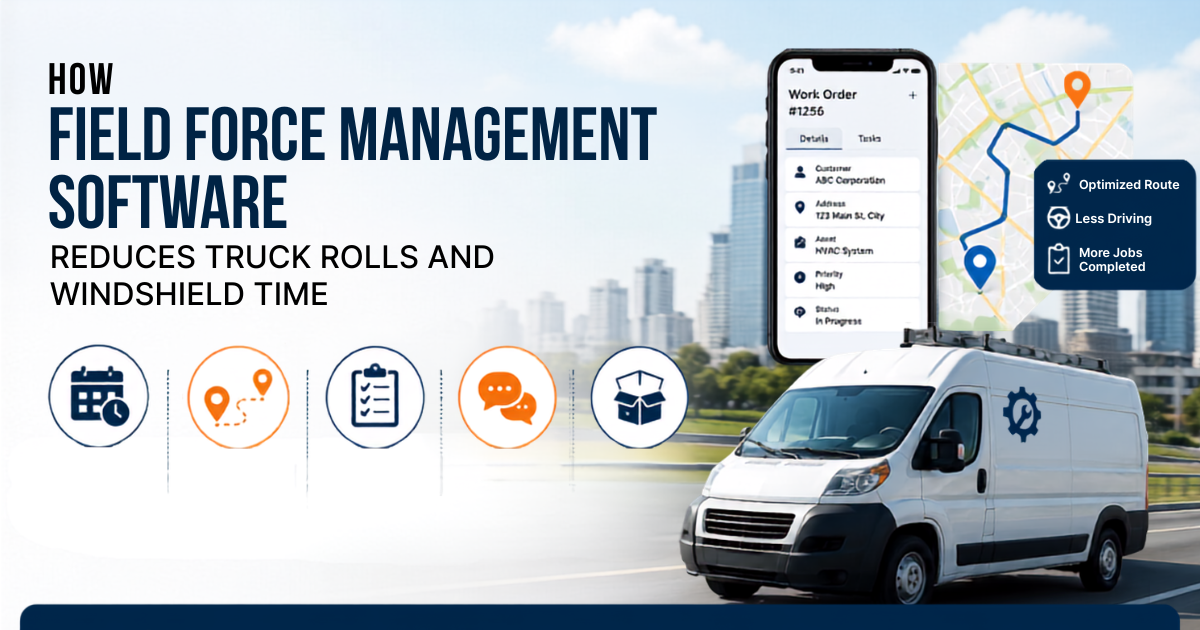
Field Force Management Software reduces truck rolls by helping service businesses optimize technician scheduling, improve route planning, and eliminate unnecessary repeat visits. Combined with Field Service Management Software, it increases productivity, lowers fuel costs, and delivers faster customer service.
What Are Truck Rolls and Windshield Time?
A truck roll refers to sending a technician or service vehicle to a customer location. While many visits are necessary, repeated trips caused by missing information, unavailable parts, or poor scheduling increase operational costs.
Windshield time is the amount of time technicians spend driving between job sites instead of performing service work. High windshield time means lower productivity, increased fuel costs, and fewer completed jobs each day.
Modern Field Force Management Software helps businesses tackle both of these challenges with smarter planning and better visibility.
How Field Force Management Software Reduces Unnecessary Trips
Manual scheduling often results in technicians traveling long distances or revisiting customer locations because of incorrect job assignments.
A reliable Field Service Software automatically assigns jobs based on technician skills, location, availability, and workload. This ensures the right technician arrives with the right information the first time, reducing repeat visits while improving operational efficiency.
Real-Time Route Optimization Saves Travel Time
One of the biggest advantages of Field Workforce Management Software is intelligent route optimization.
Instead of following static schedules, technicians receive the fastest and most efficient routes based on traffic, location, and job priority. Less driving means more time completing service calls and better resource utilization. Businesses using Software for Field Service can complete more jobs without increasing their workforce.
Complete Job Information Prevents Repeat Visits
Many repeat truck rolls happen because technicians arrive without complete customer history, service records, or required equipment.
A modern Field Service Management App provides instant access to customer details, asset history, work orders, photos, and notes directly from mobile devices. This enables technicians to resolve issues during the first visit, improving first-time fix rates and customer satisfaction.
Better Communication Improves Field Efficiency
Poor communication between dispatchers and technicians often leads to delays and unnecessary travel.
A centralized Service Management Software keeps office staff and field teams connected through live updates, digital work orders, notifications, and status tracking. Managers can quickly adjust schedules, assign emergency jobs, and avoid wasted trips.
Inventory Visibility Reduces Extra Truck Rolls
Technicians frequently make additional visits because the required spare parts are unavailable.
With Field Service Program Software, inventory can be tracked in real time, allowing technicians to verify part availability before leaving for a job. This reduces delays, improves planning, and eliminates avoidable return visits.
Data Insights Drive Continuous Improvement
Advanced Field Service Industry Software provides reports on technician travel, completed jobs, repeat visits, fuel usage, and first-time fix rates.
These insights help businesses identify operational bottlenecks, improve scheduling strategies, and optimize technician performance. Organizations using Field Service Mgmt solutions can make data-driven decisions that increase productivity while lowering operating costs.
Conclusion
Reducing truck rolls and windshield time is one of the fastest ways to improve field service efficiency and control operational expenses. By implementing Field Service Management Software, businesses can optimize scheduling, improve technician productivity, reduce fuel costs, and deliver faster customer service.
Whether you manage a small service team or a large enterprise workforce, investing in Field Force Management Software and Service Business Management Software creates a more efficient, profitable, and customer-focused field service operation.