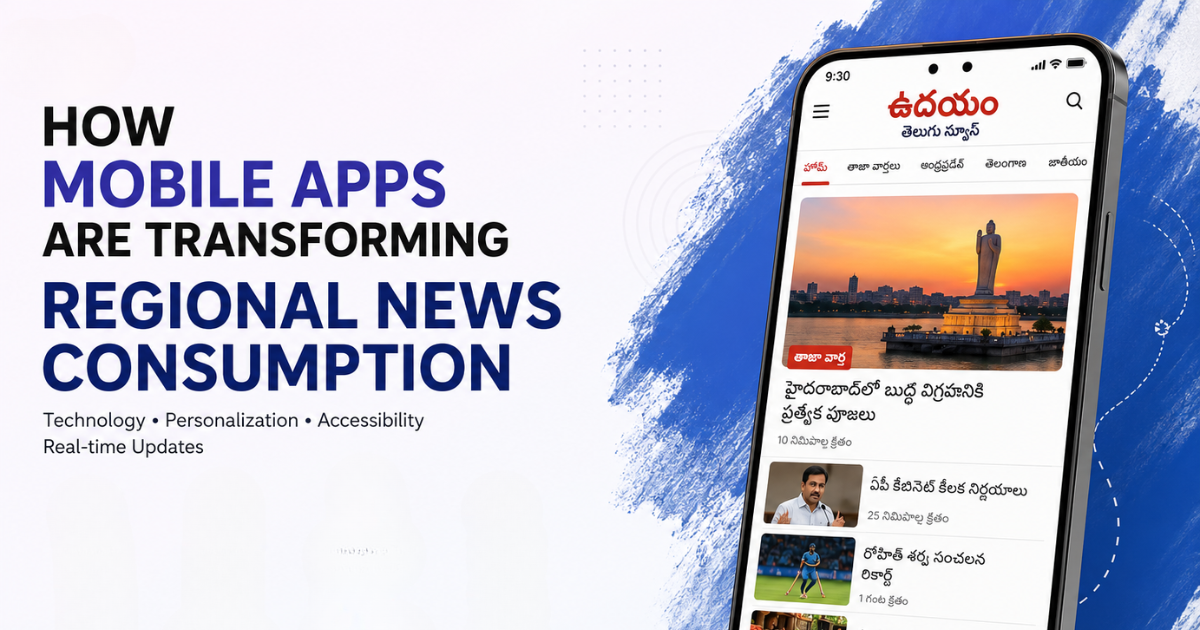
Mobile technology has fundamentally changed the way people consume news. Across India, millions of users now rely on smartphones as their primary source of daily information. This shift has been especially significant for regional-language audiences, who increasingly prefer news in their native languages through dedicated mobile applications.
Modern news apps are no longer just digital versions of newspapers. They combine intelligent technology, personalized experiences, and user-friendly features that help readers stay informed anytime and anywhere. As internet connectivity continues to improve, mobile applications are becoming the preferred platform for accessing local, national, and global news.
The Growth of Mobile News Consumption
The rapid increase in smartphone ownership and affordable mobile internet has transformed news consumption habits. Instead of waiting for newspapers or television broadcasts, users receive breaking news instantly through mobile applications.
Regional-language readers particularly benefit because they can access content in languages they are most comfortable reading, making news more understandable and engaging.
Several factors have accelerated mobile news adoption:
- Faster internet connectivity
- Affordable smartphones
- Improved mobile applications
- Better regional-language support
- Growing demand for local news
- Increasing digital literacy
These developments have made mobile apps the center of modern news consumption.
Personalized News Feeds Improve User Experience
One of the biggest technological advancements in mobile news applications is personalized content.
Instead of displaying identical headlines to every reader, modern applications analyze user interests and reading habits to recommend relevant stories.
Personalized feeds may prioritize:
- Local district news
- Politics
- Sports
- Business
- Technology
- Entertainment
- Agriculture
- Education
This intelligent content delivery helps readers discover stories that matter most to them while reducing information overload.
Push Notifications Deliver Breaking News Instantly
Push notifications are among the most powerful features of mobile news apps.
Rather than requiring users to repeatedly open an application, news alerts appear immediately when important events occur.
Examples include:
- Election results
- Weather warnings
- Traffic updates
- Government announcements
- Sports scores
- Emergency alerts
- Business developments
Regional news organizations can also send district-specific notifications, ensuring readers receive information that is directly relevant to their location.
Properly managed notifications improve engagement without overwhelming users.
Offline Reading Makes News Accessible Everywhere
Internet access is not always reliable, especially during travel or in areas with weaker connectivity.
Offline reading addresses this challenge by allowing users to download articles while connected to Wi-Fi or mobile data.
Readers can later access:
- Saved articles
- Feature stories
- Editorials
- Educational content
- Long-form reports
This feature improves accessibility and ensures uninterrupted reading regardless of network availability.
Video Integration Enhances Storytelling
Video has become an essential component of digital journalism.
Instead of relying solely on written articles, mobile applications increasingly include:
- Live news coverage
- Short news summaries
- Interviews
- Ground reports
- Explainer videos
- Press conferences
Videos help audiences understand complex stories quickly while making news more engaging for younger readers who consume visual content regularly.
Many news apps now combine text, photographs, graphics, and videos into a single interactive story.
Regional-Language Interfaces Create Better Accessibility
Regional-language interfaces have significantly improved digital inclusion.
Users can navigate applications entirely in their preferred language without switching to English.
Important interface elements include:
- Menus
- Search options
- Notifications
- Categories
- Settings
- Comments
- Sharing features
Better Unicode support, improved fonts, and accurate rendering make reading comfortable across different devices.
For Telugu readers, applications that provide complete language support offer a more natural and enjoyable experience than translated interfaces.
Location-Based News Delivers Relevant Information
Location-aware technology allows news applications to provide highly relevant local updates.
With user permission, apps can prioritize stories based on geographic location.
Examples include:
- District news
- City announcements
- Local weather
- Road closures
- Public transport updates
- Community events
- Nearby emergencies
Instead of searching manually, readers receive important local information automatically.
This feature increases the usefulness of mobile news applications in everyday life.
Accessibility Features Help More People Read News
Inclusive design ensures news applications are usable by people with varying needs.
Common accessibility features include:
- Adjustable font sizes
- High-contrast display modes
- Screen reader compatibility
- Voice narration
- Simple navigation
- Dark mode
- Captioned videos
These improvements benefit older readers, visually impaired users, and anyone who prefers a customized reading experience.
Accessibility is becoming a standard expectation rather than an optional feature.
Lightweight App Design Improves Performance
Many regional-language users rely on budget smartphones with limited storage and processing power.
Developers therefore focus on lightweight application design by:
- Compressing images
- Optimizing code
- Reducing unnecessary animations
- Loading content efficiently
- Minimizing storage usage
Smaller applications install faster, launch quickly, and perform better on entry-level devices.
This approach expands access to digital news for a wider audience.
Efficient Data Consumption Matters
Although mobile internet is increasingly affordable, many users still monitor their data usage.
Modern news apps reduce bandwidth consumption through technologies such as the following:
- Adaptive image compression
- Smart caching
- Efficient video streaming
- Background synchronization
- Progressive content loading
Users can often choose whether videos play automatically or only over Wi-Fi, helping them manage mobile data more effectively.
Efficient data usage encourages more frequent reading and longer sessions.
Reader Retention Through Better User Experience
Keeping readers engaged requires more than publishing quality journalism.
Successful mobile news apps improve retention through features such as the following:
- Personalized recommendations
- Reading history
- Bookmarking
- Article sharing
- Topic following
- Daily news digests
- Interactive polls
These capabilities encourage readers to return regularly while creating a smoother, more personalized experience.
Consistent performance and intuitive navigation also contribute to long-term user loyalty.
Privacy Considerations in Mobile News Apps
As personalization becomes more advanced, privacy remains an important concern.
Responsible news applications should clearly explain the following:
- What information is collected
- Why data is collected
- How it is stored
- Whether it is shared with third parties
- Available privacy controls
Users should be able to:
- Control notification preferences
- Manage location permissions
- Clear browsing history
- Delete saved data
- Review privacy settings
Transparent privacy practices build trust while giving readers greater control over their personal information.
Telugu Digital News and Mobile Applications
The growing popularity of Telugu digital journalism demonstrates how mobile technology is expanding access to regional information. Readers increasingly expect fast-loading apps, instant alerts, video reports, and localized updates delivered in their native language. Platforms such as Udayam Telugu News illustrate how regional publishers can use mobile technology to make district-level reporting, state news, politics, business, sports, and entertainment easily accessible through smartphones while maintaining a familiar language experience.
The Future of Regional News Apps
Emerging technologies will continue shaping mobile news applications over the coming years.
Future innovations may include:
- AI-powered recommendations
- Voice-controlled navigation
- Automatic language translation
- Personalized audio news
- Augmented reality storytelling
- Improved speech-to-text features
- Smarter search capabilities
These advancements will make regional news more accessible, interactive, and personalized for diverse audiences.
Conclusion
Mobile applications have become the primary gateway to regional news for millions of readers. Features such as personalized feeds, push notifications, offline reading, video integration, regional-language interfaces, location-based updates, accessibility tools, lightweight design, efficient data usage, and strong privacy controls create a richer and more convenient news experience.
As mobile technology continues to evolve, regional-language journalism will become even more accessible, helping readers stay informed about the issues that matter most to their communities while strengthening the reach and impact of local news ecosystems.