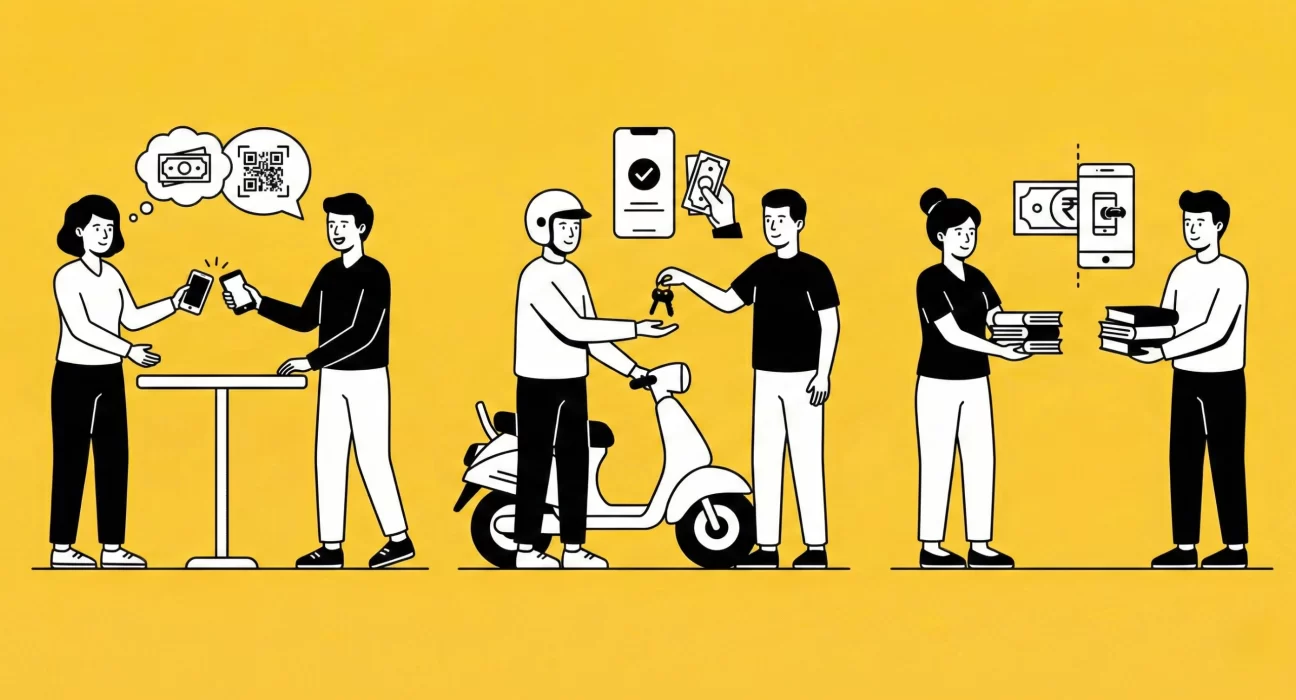
You’ve sold an old phone to someone nearby. They want to pay online. You prefer cash. Now you’re both stuck trying to figure out what works.
Or maybe you’re buying a second-hand fridge. The seller insists on UPI before you’ve even seen the item. You’re not comfortable with that. The deal falls through.
Payment shouldn’t be this complicated when you’re just trying to buy and sell locally.
Most C2C marketplaces have added layers of payment gateways, escrow systems, and digital wallets, making simple transactions feel like bank operations. For everyday buying and selling, this creates more friction than it solves.
What people actually need is flexibility. Cash when it makes sense. Digital when it’s convenient. No forced systems. No unnecessary steps.
The Real Challenge with Payments in Local Transactions
Here’s what happens in most C2C marketplaces today.
Platforms push you towards their preferred payment method. Sometimes it’s a wallet you’ve never used. Sometimes it’s a payment link that takes forever to process. Sometimes there’s a “convenience fee” that isn’t convenient at all.
For local buyers and sellers, this doesn’t match how transactions naturally work.
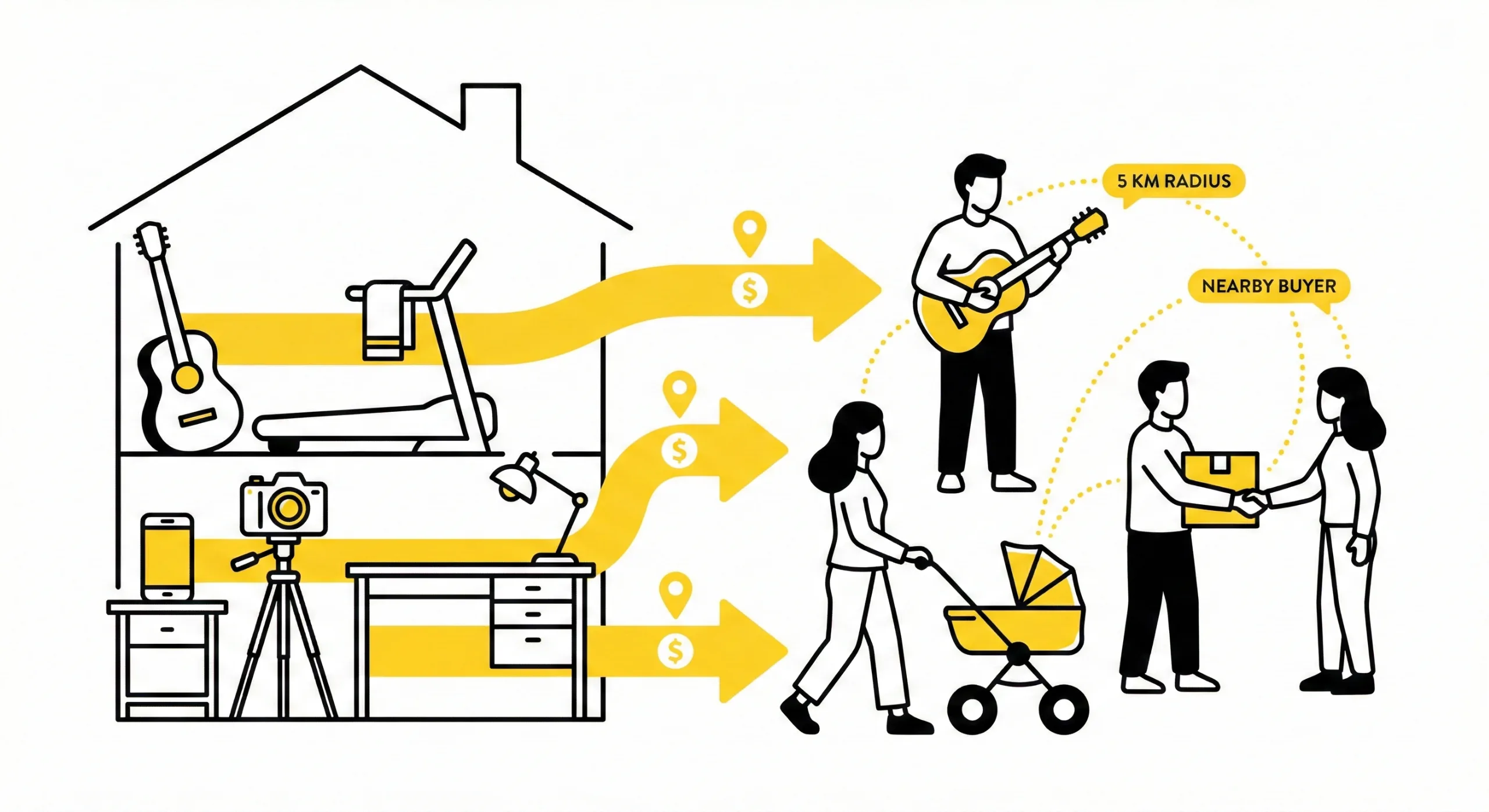
If you’re meeting someone in person to hand over a laptop or a washing machine, why do you need a payment gateway? Why can’t you just accept cash and be done with it?
On the other hand, if you’re buying something sight unseen even from someone nearby you might want the security of a digital payment trail.
The problem isn’t digital payments or cash. Its platforms force one method when people need both.
How Payment Preferences Vary Across India
Different people trust different methods.
Older buyers and sellers often prefer cash. It’s immediate. No apps to learn. No transaction limits. No failed payments.
Younger users lean towards UPI or digital wallets. It’s faster for them. No need to carry cash. Instant confirmation.
First-time sellers might not even have a business account or payment gateway. They just want to hand over an item and receive money whatever form works.
Budget-conscious buyers want to avoid any extra charges. If a platform adds processing fees or forces them into a wallet with minimum balance requirements, they’ll skip the deal.
In smaller towns and cities, cash still dominates. In metros, UPI has become second nature. A marketplace that ignores these differences creates unnecessary barriers.
What’s Changing in C2C Payment Systems
The future isn’t about one payment method winning. It’s about giving people options that suit their comfort level and situation.
More flexibility at checkout
Platforms are slowly realising that mandating one payment type pushes users away. Expect more marketplaces to support multiple methods without favouring any.
Simpler direct payments
When you buy and sell locally, meeting in person is common. Platforms that allow you to mark a transaction as “cash on delivery” or “paid offline” make the process smoother.
UPI as the default digital option
UPI has become so widespread in India that most people already use it. Platforms that integrate UPI without adding extra charges or complicated sign-ups will have an edge.
Less dependency on escrow for local deals
Escrow makes sense for high-value items or long-distance transactions. But for a ₹2,000 chair or a ₹5,000 bike, you’re picking up yourself? It’s overkill. Sympl platforms let buyers and sellers decide how to handle payment directly.
Trust-based payment models
Some platforms are experimenting with verified seller badges or buyer ratings that reduce the need for heavy payment security layers. When trust is high, people don’t need intermediaries.
Why Sympl Classifieds Handles Payments Better
Traditional classifieds never controlled how you paid. They just connected you with a buyer or seller. The payment was your business.
This approach still works especially for local transactions.
When you sell items fast through Sympl Classifieds:
- You meet the buyer in person and decide together: cash or UPI
- No platform fees are eating into your sale price
- No delays waiting for payment processing
- No confusion about which wallet or gateway to use
For buyers, it’s equally straightforward:
- You inspect the item first, then pay
- Choose the method you’re comfortable with
- No need to load money into a new app
- Immediate transaction, no waiting period
This isn’t outdated. It’s practical.
Real-Life Payment Scenarios in Local Buying and Selling
Let’s look at how this plays out.
Selling a study table
You’re moving out of your flat. A student from a nearby college wants your table. You meet at your place. They see it, like it, and pay ₹1,500 in cash. Done in 20 minutes.
If a platform forced you both to use a specific payment app, you’d spend more time setting that up than completing the actual sale.
Buying a second-hand bike
You find a bike listed nearby. You visit the seller, check the condition, and decide to buy. The seller prefers UPI. You scan their code, pay ₹12,000, and ride home.
No escrow needed. No platform holding funds. Just a direct transfer between two people who’ve met and agreed on terms.
Selling old textbooks
A junior from your college wants your engineering books. You meet at the campus café. They hand over ₹800 in cash. You hand over the books.
This is how most student-to-student transactions happen. Platforms that complicate this with digital-only payments lose these users.
Cost and Time Benefits of Flexible Payment Options
When platforms don’t force payment methods, everyone saves.
No processing fees
Many payment gateways charge 1–2% per transaction. On a ₹10,000 item, that’s ₹100–200 you lose. Cash and direct UPI avoid this.
Faster deal closure
If both parties can pay how they want, there’s no back-and-forth about payment setup. The transaction happens immediately.
No failed transactions
We’ve all faced failed UPI payments or app crashes. When you have the option to pay cash, technical issues don’t kill the deal.
Lower risk for small transactions
For items under ₹5,000, escrow or payment protection feels like overkill. Direct payment keeps things simple and fast.
These aren’t huge savings individually. But across multiple transactions, they add up especially for students or families buying and selling regularly.
Who Benefits Most from Payment Flexibility?
Students
Buying and selling books, gadgets, or furniture with limited budgets. They need options that don’t involve extra fees or complicated setups.
First-time sellers
People who’ve never sold online and don’t have digital payment accounts. Cash lets them participate without barriers.
Working professionals
Relocating frequently and selling furniture or appliances quickly. They want payments that match their tight schedules cash for instant deals, UPI for convenience.
Senior citizens
Selling household items or buying second-hand goods. Many prefer cash or simple bank transfers over app-based wallets.
Budget-conscious buyers
Anyone avoiding extra charges. If a platform adds payment fees, they’ll look elsewhere.
How Local Classifieds Simplify the Payment Process
Here’s what makes payment easier when you buy and sell locally:
Direct negotiation
You and the buyer decide the payment method during your conversation. No platform imposing rules.
Meet and pay
For most local deals, you meet in person. This lets you inspect the item and pay on the spot whatever method suits both parties.
No forced digital accounts
You don’t need to sign up for wallets, load money, or link cards. Use what you already have.
Clear communication
Because you’re talking directly to the buyer or seller, there’s no confusion about payment. You agree upfront and follow through.
Faster responses
When payment isn’t a complicated step, deals move faster. Sellers get their money quickly. Buyers get their items without delays.
Practical Tips for Handling Payments in Local Transactions
Whether you’re buying or selling, here’s how to keep payments smooth:
For sellers:
- Mention your preferred payment method in the listing
- Be open to both cash and UPI if possible
- If accepting digital payments, share a QR code or UPI ID only after confirming the buyer
- For high-value items, meet in public places even if accepting cash
For buyers:
- Ask about payment options before meeting
- Carry both cash and your UPI app to stay flexible
- Never pay in advance for local deals unless you trust the seller
- Confirm the amount before completing any digital transaction
For both:
- Agree on the payment method during your first conversation
- Avoid third-party payment apps you’re unfamiliar with
- Keep payment simple overthinking creates delays
What to Look for in Future Marketplaces
As payment systems evolve, watch for platforms that offer:
Multiple payment options
Cash, UPI, and bank transfers are all accepted without preference or penalty.
No hidden fees
Transparent pricing with no payment processing charges for direct transactions.
Offline transaction tracking
The ability to mark deals as completed even if payment happened outside the platform.
Seller payment flexibility
Let sellers choose how they want to be paid, not what the platform wants.
Buyer protection without escrow
Ratings, reviews, and verified profiles that build trust without locking funds.
Platforms that focus on these will attract more local buyers and sellers who value simplicity.
The Shift Towards Trust-Based Payments
The biggest change coming isn’t in technology. It’s in the mindset.
Platforms are realising they don’t need to control every payment to facilitate safe transactions. Trust can be built through transparency, ratings, and community feedback.
When you’re meeting someone locally to buy a bike or sell a sofa, you’re already taking a trust-based approach. You meet. You inspect. You pay. You leave.
This is how most offline buying and selling has always worked. The internet just makes finding each other easier.
Payments should support this natural flow, not complicate it.
Why Low-Cost Buying Depends on Payment Simplicity
Here’s something people don’t talk about enough.
Complex payment systems drive up costs.
Platforms pass gateway fees to users. Escrow systems require infrastructure that gets funded through commissions. Digital wallets need customer support teams. All of this eventually shows up in higher prices or hidden charges.
When you buy and sell locally with simple payment options, you avoid most of this.
A seller doesn’t inflate their price to cover platform fees. A buyer doesn’t pay extra for “secure checkout.” The transaction stays clean and affordable.
For budget-conscious users, this makes a real difference.
The Role of Cash in Modern C2C Marketplaces
Despite the push towards digital, cash isn’t going anywhere.
In many parts of India, especially smaller towns and rural areas, cash remains the preferred method. Not because people distrust digital payments, but because it’s familiar, immediate, and doesn’t depend on internet connectivity.
Even in cities, cash works well for low-value transactions. Nobody wants to open a payment app for a ₹300 deal.
Platforms that accept this reality and support cash transactions alongside digital options will serve a wider audience.
Moving Forward: What Users Actually Want
People don’t care about fancy payment technology. They care about getting things done quickly and safely.
If you’re selling an item, you want the money in your hand (or account) as soon as possible. If you’re buying something, you want to pay only after you’re satisfied with what you see.
Platforms that enable this without forcing unnecessary steps will win.
The future of payments in C2C marketplaces isn’t about innovation for its own sake. It’s about removing barriers and letting people transact the way they naturally would.
Payment systems are evolving, but the core need hasn’t changed. People want simplicity, safety, and choice.
Whether you prefer cash or UPI, meeting in person or coordinating pickups, the best platforms will be the ones that adapt to you not the other way around.
Local buying and selling works because it’s straightforward. Payments should be too.